

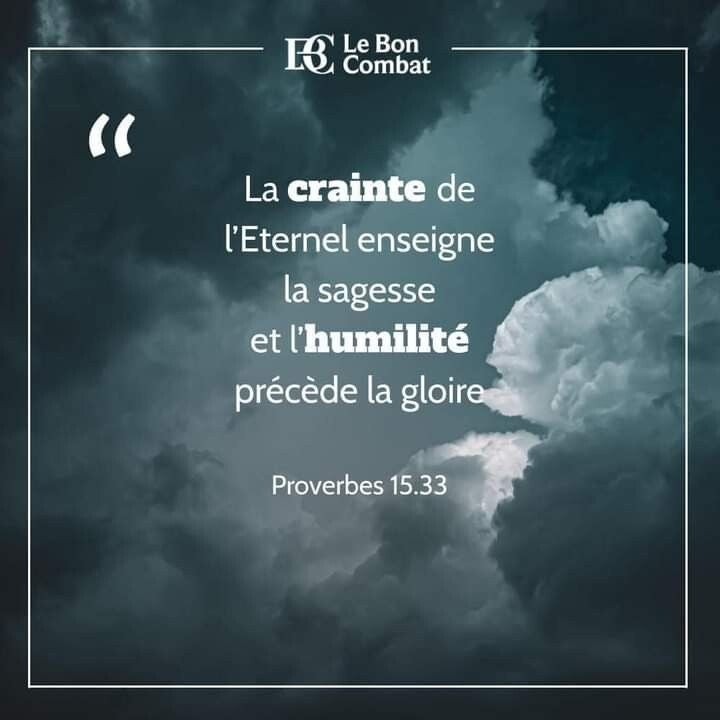
Humility is not a weakness, a lack of self-confidence, or a way of belittling oneself. Rather, it refers to a disposition of the heart that accepts not placing oneself above others, that acknowledges one’s limitations, and that receives from God who we are and what we have. Humility, therefore, does not diminish our worth; it simply puts God in His rightful place and us in ours.
This attitude runs throughout the Bible’s teaching. It teaches us to listen, to accept advice, to acknowledge that we are not always right, and not to make our own judgment the measure of all things. It also leads us to accept that certain situations are beyond our control and that we need God’s wisdom, grace, and guidance.
Discover in this “Short Thought” what it truly means to walk in humility according to the Bible, how it transforms our relationship with ourselves, with others, and with God, and why Jesus Christ remains our perfect model. For humility is not merely about talking less about ourselves: it teaches us to live in such a way that God can take a greater place in our hearts, our choices, and our relationships.
A humble heart remains teachable
One of the most discreet expressions of humility is our ability to recognize that we do not know everything. We may have experience, know the Scriptures, hold strong convictions, and yet still have more to learn.
Pride easily closes the door to what could help us grow. It persuades us that our way of understanding is necessarily the best. Humility, on the contrary, always leaves room for listening, reflection and discernment.
Knowing how to receive advice
This proverb sets two attitudes against each other. One considers its own judgment sufficient; the other accepts that someone else may bring a light it had not yet perceived.
Being teachable obviously does not mean accepting every opinion without discernment. It simply means not placing our own judgment above every possibility of correction. Biblical wisdom knows how to listen, examine and retain what is right.
When someone gives us advice, do we first ask ourselves whether it might be true, or do we immediately look for a way to defend ourselves?
Humility accepts that we cannot control everything
Humility also concerns our relationship with God. It reminds us that there is a profound difference between faithfully doing our part and wanting to control everything.
At times, we would like to know in advance how events will unfold, understand every delay, and know exactly how God is going to act. But faith often places us before a simpler reality: some things are beyond us.
Under the mighty hand of God
Peter connects humility here with a very practical attitude: placing ourselves in God’s hands. The believer is not called to become passive, but to recognize that everything does not depend on him.
He can act, pray, reflect and take responsibility, while entrusting to God what he can neither foresee nor control. Little by little, this attitude frees us from the need to hold everything in our own hands.
Humility then becomes a form of trust: God remains God, even when we do not have all the answers.
Recognizing our limits is not an admission of failure. It is accepting our place as creatures and allowing God to remain in the place that belongs to him. We can move forward faithfully without needing to understand everything before obeying.
A humility that keeps us available to God
Biblical humility therefore keeps us in an attitude of openness: available to learn, available to be led, and available to recognize that God sees farther than we do.
A humble heart does not pretend to possess every answer. It can say: “Lord, teach me”, “lead me”, and sometimes simply, “I trust you.”
This may be one of the deepest signs of humility: no longer needing to know everything, explain everything or control everything in order to continue walking with God.
Go deeper into this thought
The complete document develops more fully what the Bible teaches about humility, the way we view ourselves, our relationship with others and the perfect example given by Jesus Christ.
Find the complete Short Thought just below.

Ajouter un commentaire
Commentaires